

Working out extinguisher numbers by area, risk class and floors; where to place them and how often to check them.
One of the questions business owners ask most is: 'How many fire extinguishers should I have?' The answer cannot be reduced to a single number because it depends on area, fire load, occupancy class and number of floors. Even so, a practical framework is possible. The information below is a general guide; the final decision should be based on the Regulation on Fire Protection of Buildings, the building design and fire department assessment.
Area and risk class
In low-risk places such as offices, housing and hotel rooms, roughly one 6 kg ABC powder extinguisher per 250 m² is recommended. In medium-risk areas such as shops, restaurants, schools and hospitals the ratio falls to 150 m², and in high-risk areas such as warehouses, workshops and production to 100 m². Our calculator gives a preliminary result using these ratios.
At least two per floor
Even if the floor area is small, keeping at least two extinguishers on each floor is good practice. That way, if one is unusable or the fire starts at its location, the second comes into play.
Travel distance
The walking distance to reach an extinguisher on a floor should generally not exceed 25 metres. In long corridors, warehouses and open-plan offices, checking distance can be more decisive than the number. Extinguishers should be near exits and stairs, visible and unobstructed.
Special extinguisher needs
- Kitchens and fryers: a 6 L F-class (cooking oil) extinguisher and a fire blanket
- Electrical panel and server rooms: a 5 kg CO₂ extinguisher
- Paint, solvent and fuel areas: foam or larger-capacity ABC extinguishers
- Warehouses and factories: wheeled 25-50 kg units
Mounting and marking
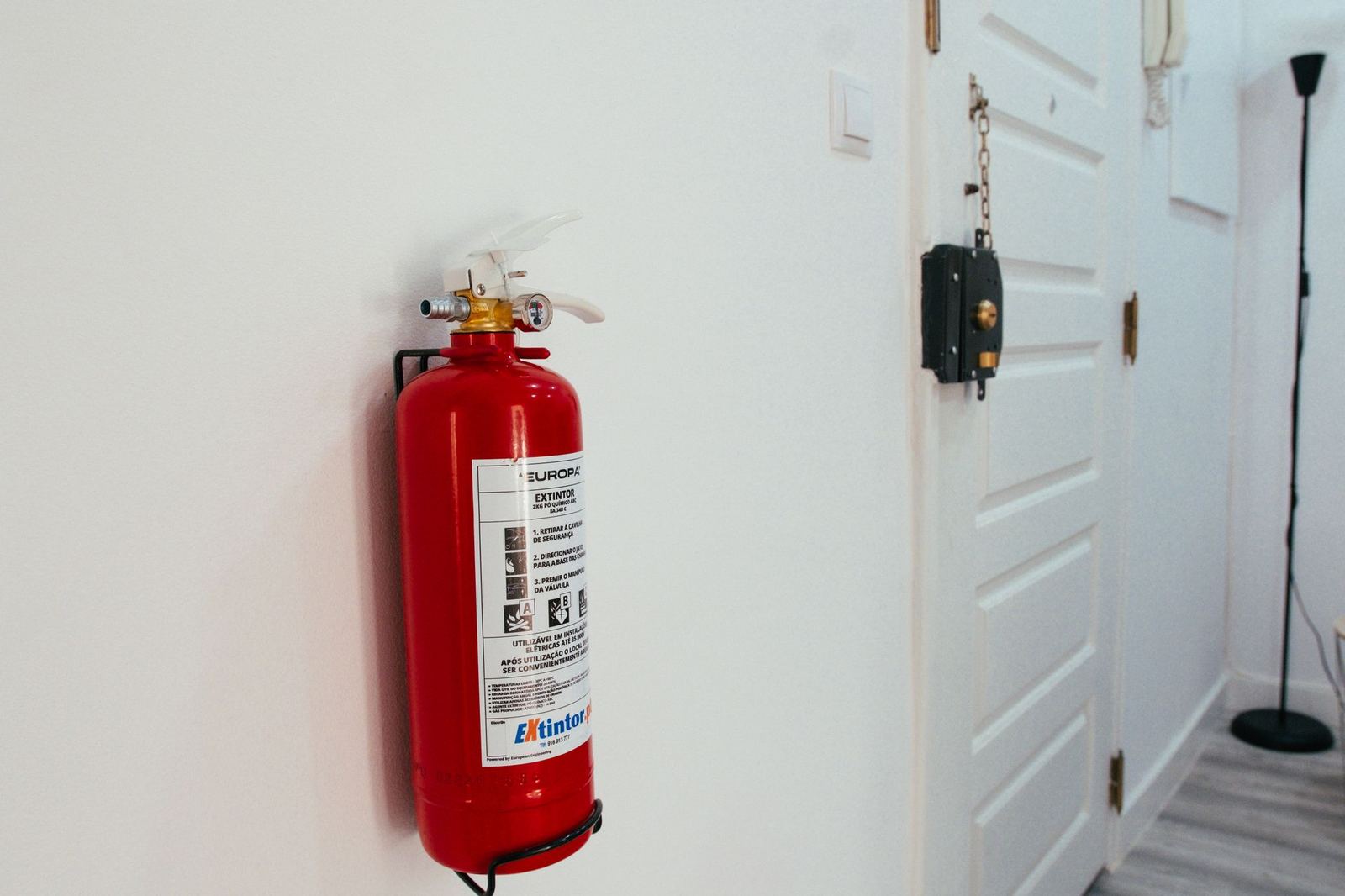
An extinguisher should be hung on the wall with a bracket, with its handle at no more than 1.2 metres above the floor, and a 'Fire Extinguisher' sign placed above it. An extinguisher left on the floor or behind a door cannot be found in a fire.
Inspection and maintenance
Extinguishers should be checked once a year; the gauge needle should be in the green zone and the seal and tag intact. Even in unused units powder compacts over time, so refilling and hydrostatic testing are needed at set intervals. The last check date and next check date should be visible on the tag.
At Alevkıran we track all your extinguishers with a barcoded inventory and send you a reminder for each one approaching its due date.
The real problem with extinguishers is often not the number but a lack of knowledge. If at least half of the employees have actually used an extinguisher, the chance of intervening in the first minutes of a fire rises markedly. Once a year we recommend practical training with a training extinguisher in place of a discharged one. Basic steps such as pulling the pin, standing at the right distance and aiming at the base are remembered only once they have been practised.